Counting activities for preschoolers, in the order skills grow
Published 2026-10-16 · Updated 2026-10-16
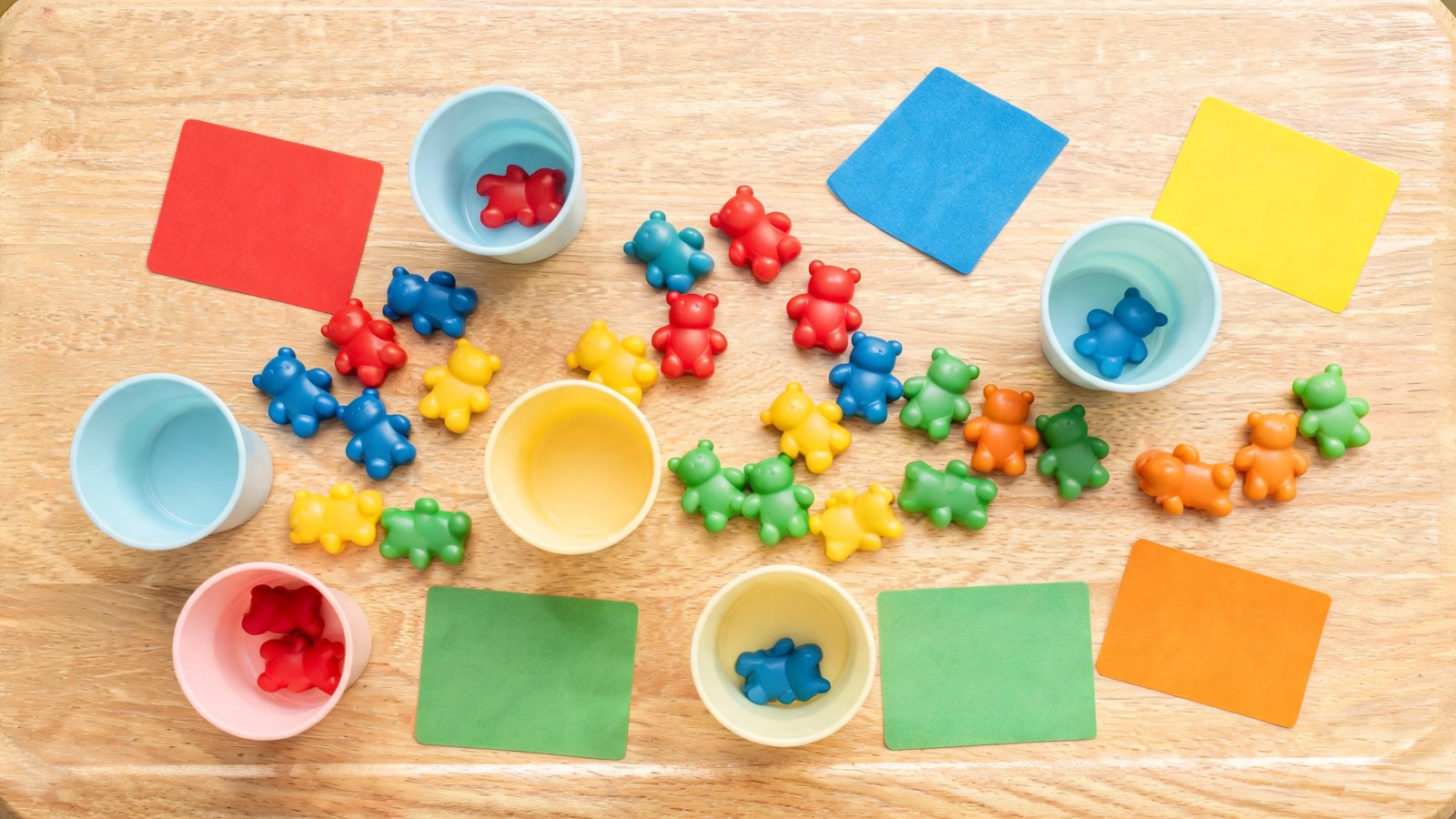
Counting activities that help preschoolers learn numbers one to ten follow a set order: see a small group, count one object at a time, then match a word to a written numeral. Worksheets can wait until those steps are easy.
Small sets come first
The Institute of Education Sciences practice guide on teaching math to children ages three through six says to teach number and operations using a developmental progression. Its first step is practice recognizing the total number of objects in small collections (one to three items) and labeling them with a number word, before counting each object. That skill is often called subitizing. The panel rated the broader recommendation moderate evidence. It also says different developmental progressions exist, so this order is a road map, not the only path.
Try this at snack. Put two crackers down and ask how many, before the child counts. Then three. Mix the arrangement so a line of three and a pile of three are both three. The guide's hiding game is the same idea: show one to three objects, cover them, and ask how many.
The CDC's three-year tips say children this age are starting to learn about numbers and counting, and suggest counting body parts, stairs, and other things you use or see every day.
Count real things
Next, the IES guide says to promote accurate one-to-one counting as a way to find the total. The last number said is the total. That idea is the cardinality principle. Point to each block and say one number per block. If the child says the last number and then counts again when you ask "how many," stay on this step.
Keep sets small, then grow them. The guide says to start each new step with small collections of one to three items, then move to larger collections. The CDC's four-year tips suggest counting simple things, such as fingers, toys, or bananas.
By five years, the CDC lists counts to ten, and names some numbers between one and five when you point to them. Counting aloud to ten and naming a few written numerals are related, and they are not the same skill. A child can sing to ten and still not know that the last word is the size of the set.
If counting worries you, or a number skill the child used to show is gone, talk with your child's doctor and ask about developmental screening, the early step on the CDC five-year page.
A word beside a mark
After counting collections is steady, the IES guide says to encourage children to label collections with number words and numerals, and to use counting to compare quantities. Which plate has more berries? Count both and see.
Match a numeral card to a set of toys. Point to a numeral and ask its name, which is the five-year CDC milestone of naming some numbers between one and five when you point to them. Leave larger numerals for later.
A day of number play
A counting day can be three short moments, not a lesson block:
- Snack: how many pieces, for sets of one to three, named before counting.
- Stairs or toys: one touch, one number word, then "how many?"
- A card with a numeral next to the same number of objects.
Printable number pages are optional practice after that play. The Classroom Alphabet and Numbers Pack ($11.00) is letter-of-the-week and number pages one teacher can print for their own class of children aged about 3 to 6. The pages are not a curriculum, and no learning outcome is promised. Printing stays with one teacher and that teacher's own students.
Letter games that pair with this number work are in letter recognition activities.
What are some fun activities to teach numbers 1 to 10?
Label groups of one to three, count each object in a small set, then point to written numerals. Use snacks, toys, and stairs.
Sources
- Teaching Math to Young Children, Institute of Education Sciences (2014)
- Milestones by 3 Years, Centers for Disease Control and Prevention (2026)
- Milestones by 4 Years, Centers for Disease Control and Prevention (2026)
- Milestones by 5 Years, Centers for Disease Control and Prevention (2026)