What a tripod grasp is, and play that builds it
Published 2026-10-16 · Updated 2026-10-16
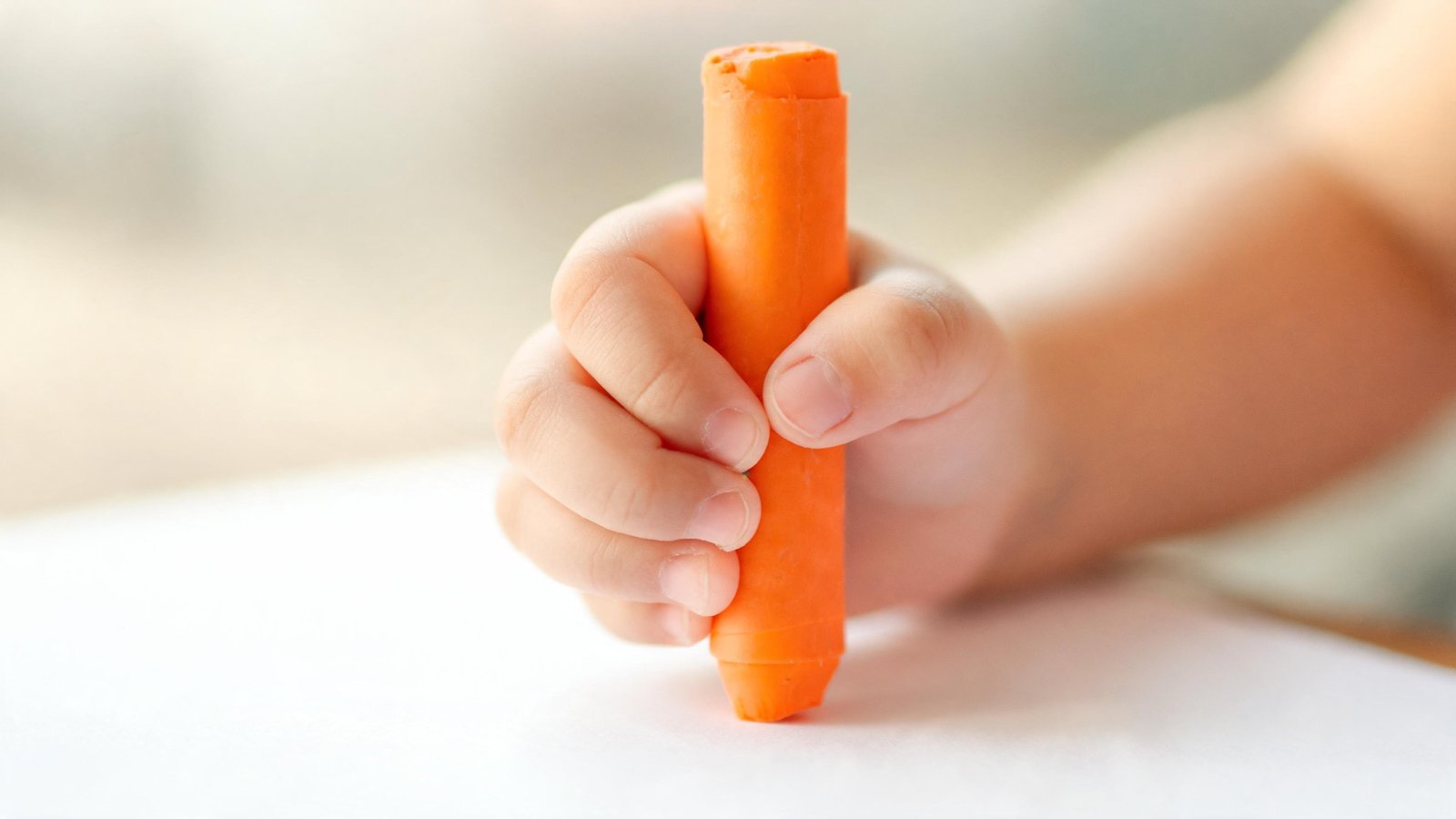
A tripod grasp is a three-finger pencil hold: thumb and index finger pinch the pencil, and the pencil rests on the middle finger. Play that strengthens that pinch is the help that fits the preschool years.
What the grip looks like
Peppler Occupational Therapy describes the precision side of the hand as the thumb, pointer, and middle finger, working apart from the ring finger and little finger, which tuck into the palm. A static grasp keeps those fingers still while the wrist or arm moves the pencil. A dynamic grasp lets the fingers move the pencil. Peppler notes that in-hand skill, moving the pencil around inside one hand, may matter even more than the tripod shape itself.
The OT Toolbox, written by occupational therapist Colleen Beck, describes a static tripod as the thumb and pointer holding the utensil while it rests on the last joint of the middle finger, with the other two fingers tucked. A dynamic tripod uses the same placement, with the fingers doing the moving. A four-finger, or quadrupod, hold is a close cousin and can still be an efficient grip.
The CDC four-year milestones put the early version in plain words: holds a crayon or pencil between fingers and thumb (not a fist). That is a milestone most children reach by four years. It is not a demand that every four-year-old already write letters with a mature dynamic hold.
How the hand grows
The OT Toolbox lays the usual path in three groups. Primitive grasps use the whole hand and arm, including a palmer hold in the early toddler years and a digital pronate hold around ages two to three. Transitional grasps include a quadrupod hold around ages three to four and a static tripod around three and a half to four. A dynamic tripod is described around ages four to six or seven, and a true dynamic tripod may not be established until around fourteen years of age. Timing varies, and a grasp that skips a pictured stage can still be fine.
Peppler OT starts the same story at the gross palmer grasp and adds the skills under the grip: moving an object from palm to fingertips, turning a pencil to the eraser, and keeping the wrist slightly extended.
Play that shapes the grip
Skip the pencil lecture. Build the pattern in play.
- Pinch. Tweezers, clothespins, and tongs, which Peppler OT says strengthen thumb opposition to the fingers.
- Dough. Playdough by itself, Peppler writes, gives the hand the experiences used to develop a grasp.
- String. Holding a lace still with thumb and forefinger while a bead slides on practices a pincer grip, again from Peppler OT.
- Vertical marks. Drawing on an easel, a window, or a wall. The OT Toolbox says a vertical surface encourages wrist extension.
- Short crayons. Peppler OT suggests broken or tiny crayons so the thumb and index finger land on the crayon.
The OT Toolbox says most children can wait on a pencil grip until school age, often around five to seven years, and then only if writing brings fatigue, discomfort, or an inefficient hold. Before that, hands are still developing. If the child avoids drawing, tires after a few marks, or has lost a hand skill, talk with your child's doctor and ask about developmental screening. The CDC four-year page is where that early step is written for families.
Grips, and when to wait
A functional hold matters more than a picture in a textbook. If the child can draw and the hand is comfortable, keep offering short crayons and play.
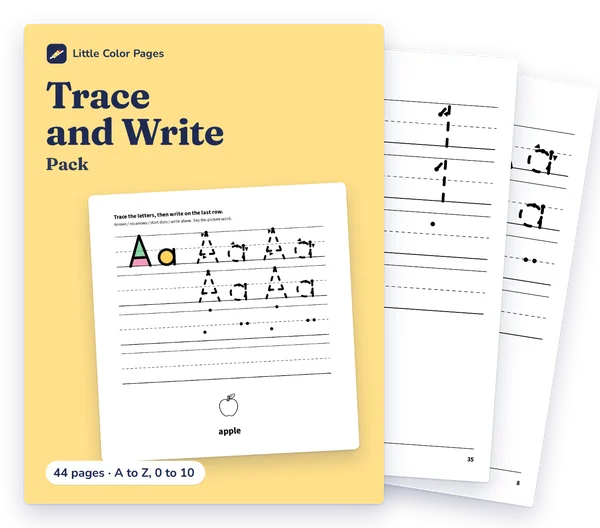
When marks on paper are welcome, the Trace and Write Pack ($2.00) is print-only tracing practice, 44 pages per PDF, in US Letter and A4. Stroke order is a simple ball-and-stick style, not a named school handwriting program. No learning outcome is promised, and the pages are not a curriculum.
The wider hand sequence, from dough to beads to crayon, is in fine motor activities for preschoolers.
What is the tripod grasp?
The thumb and index finger hold the pencil while it rests on the middle finger. A static hold moves from the wrist. A dynamic hold moves from the fingers.
How to do a tripod grip?
Offer short crayons, vertical drawing, tweezers, and play dough. Correcting the fingers all afternoon is less useful than that play.
What are the different types of grasps?
A whole-hand hold, a four-finger hold, and a tripod hold. Timing varies, and a usable grip can differ from the chart.
Sources
- Dynamic Tripod Grasp and Hand Skills, Peppler Occupational Therapy (2025)
- Pencil Grasp Development, The OT Toolbox (2026)
- Milestones by 4 Years, Centers for Disease Control and Prevention (2026)