Fine motor activities for preschoolers, from fist to fingers
Published 2026-10-16 · Updated 2026-10-16
Fine motor activities that help a preschooler get ready to write start with the whole hand, then the pinch, then a finger-and-thumb hold. Play does that work. A long writing lesson does not.
From a fist to the fingers
Hands grow through a sequence pediatric occupational therapists describe in plain stages. The OT Toolbox groups grasp into primitive, transitional, and mature patterns: a whole-hand hold in the toddler years, a four-finger or static tripod hold around the preschool years, and a dynamic tripod later, sometimes not settled until around fourteen years of age. Peppler Occupational Therapy describes the same path, from a gross palmer grasp through later stages to a tripod grasp on a pencil.
By three years, the CDC lists strings items together, like large beads or macaroni, and puts on some clothes by himself. By four years, the CDC lists holds a crayon or pencil between fingers and thumb (not a fist), unbuttons some buttons, and catches a large ball most of the time.
Use the order below. Stay on an earlier step if the later one frustrates the child. If a milestone is missing, or a skill the child used to have is gone, share that with your child's doctor and ask about developmental screening, the early step the CDC four-year page names.
Play that builds the hand
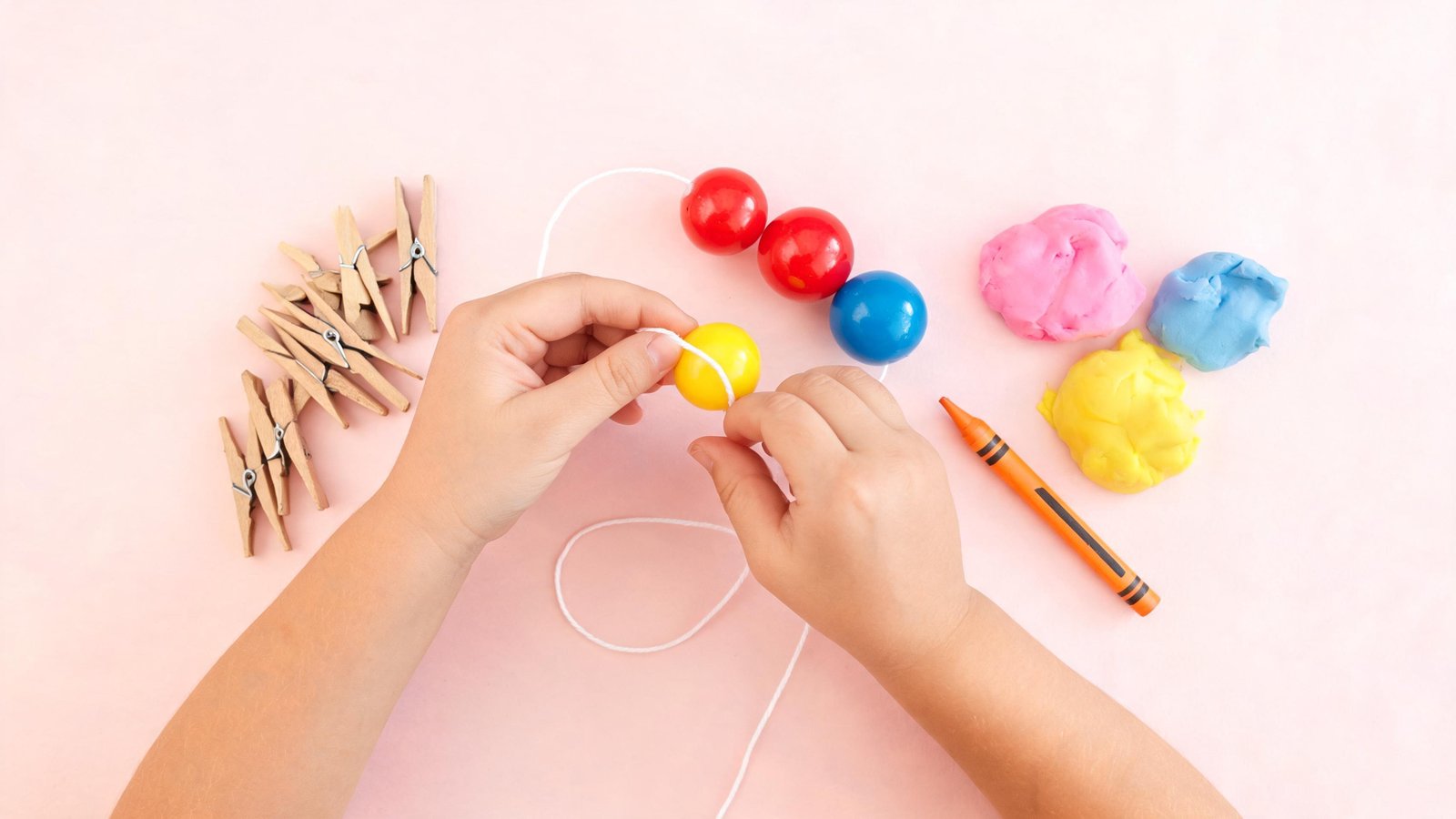
Whole hand. Squish, press, and pinch play dough, and roll balls of it. The CDC's three-year tips say that kind of play builds hand and finger muscles for writing, buttoning, and cutting. Catch a large ball. The four-year movement list includes catching a large ball most of the time.
Pinch and release. String large beads or macaroni, which is the three-year milestone. Open and close clothespins. Hide a toy in dough and let the child pinch it out. Peppler OT says pinching tools strengthen the pattern of thumb opposition to the fingers, and that playdough by itself gives the hand the experiences used to develop a grasp.
Toward the fingers. Draw on a wall, a window, or an easel. A wall or easel is useful here: The OT Toolbox says drawing on a vertical surface encourages wrist extension. Peppler OT suggests the same, plus broken or tiny crayons so the thumb and index finger land on the crayon. The four-year CDC milestone for that stage is a hold between fingers and thumb, not a fist.
Toward a pencil hold
When the child wants to make marks, keep the session short and the crayon short. A fist around a long pencil is a clue to go back to dough and beads, not a reason to correct the fingers all afternoon.
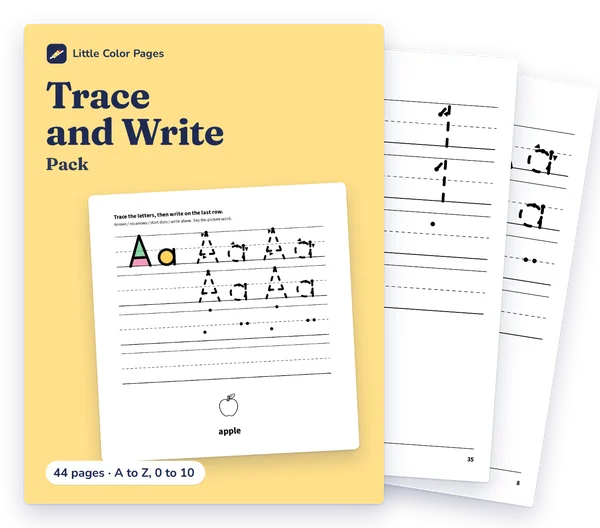
The Trace and Write Pack ($2.00) starts with pre-writing paths (straight, zigzag, wave, loop, curve) from one picture to another, then letters and numbers with less help each row. These pages are not a curriculum, and they promise no learning outcome.
What a tripod grasp looks like, and play that builds it on purpose, is in tripod grasp. How those hand skills show up on a school checklist is in the kindergarten readiness checklist.
How to help preschoolers with fine motor skills?
Start with whole-hand play such as dough and a large ball, then pinching and stringing, then short crayons on a wall or easel.
What are some examples of fine motor activities?
Play dough, large beads, clothespins, tearing paper, and drawing on a vertical surface all train the small muscles of the hand.
Is handwriting a fine motor skill?
Handwriting uses fine motor control, plus posture and attention. The hand work comes before long writing lessons.
Sources
- Milestones by 3 Years, Centers for Disease Control and Prevention (2026)
- Milestones by 4 Years, Centers for Disease Control and Prevention (2026)
- Pencil Grasp Development, The OT Toolbox (2026)
- Dynamic Tripod Grasp and Hand Skills, Peppler Occupational Therapy (2025)