How to run preschool at home, boxed plan or not
Published 2026-10-16 · Updated 2026-10-16
You can homeschool preschool with a boxed curriculum or with a short week you plan at the kitchen table. Either way, cover play, talk, movement, and early marks on paper. A full school day is not required.
Pick a box or skip the box
A boxed set helps if you want lessons already written. Skip the box if you would rather follow your child's play and add a few focused minutes for books, counting, and hands.
Use the same checks either way:
- Cover every domain, not letters alone. NAEYC says physical, cognitive, social and emotional, and linguistic development are all important, and each supports the others.
- Keep play at the center. Those NAEYC principles say play is essential from birth through age eight, and that play promotes joyful learning across language, thinking, and getting along with others.
- Still have a plan. NAEYC describes guided play, in which an adult uses the child's interest to introduce a new word or idea, inside a prepared space.
- Expect uneven timing. NAEYC notes that development and learning occur at varying rates from child to child.
A faith-based grade set, a play-and-language program, or a theme pack can pass those checks. Match the set to the morning you already have. This page is not a legal guide to homeschool rules.
A short week at home
Repeat a simple shape each day. Change the theme if you want a change. Stop while the child is still willing.
- Read a picture book and talk about what happens next. The CDC's four-year milestones suggest reading together and asking what comes next in a well-known story.
- Move. Dance, walk, or play with a large ball. Catching a large ball most of the time is a four-year movement milestone.
- Use the hands. Play dough, large beads, or a thick crayon fit here. By four years, most children hold a crayon or pencil between fingers and thumb (not a fist).
- Count real things. That same CDC page suggests counting fingers, toys, or bananas.
- Pretend. Pretending to be something else during play is a four-year social milestone.
When a four-year milestone is missing, or a skill that used to be there has dropped away, talk with your child's doctor and ask about developmental screening, which is the step the CDC four-year page names. Extra worksheets are not the next step.
Where tracing pages fit
Paper comes after play and talk, for a few minutes, when the child wants to make marks. Broad paths come before letters.
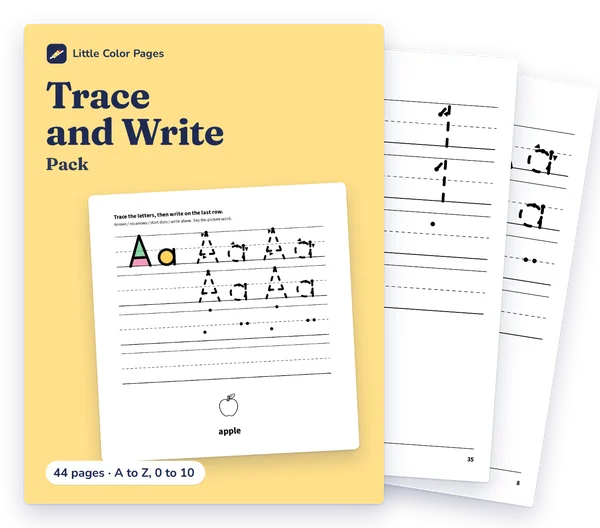
The Trace and Write Pack ($2.00) is tracing practice for a child aged about 2 to 6: from broad paths to letters and numbers, with less help on each row. No learning outcome is promised, because these tracing pages are not a curriculum.
If kindergarten is the next question, the kindergarten readiness checklist lists skills public guides watch for. Hand play that comes before any tracing page is in fine motor activities for preschoolers.
How to prepare to homeschool your child?
Plan play across movement, talk, hands, and books, and keep each block short. A boxed set is optional.
How long does it take to homeschool preschool?
These sources do not set a required day length. A few short play blocks can fill a home preschool morning.
What is the preschool curriculum?
It is the mix of play, language, movement, and early ideas you actually do, not only a purchased box.
Sources
- Principles of Child Development and Learning and Implications That Inform Practice, National Association for the Education of Young Children
- Milestones by 4 Years, Centers for Disease Control and Prevention (2026)