Activities that keep a three-year-old busy at home
Published 2026-10-16 · Updated 2026-10-16
A three-year-old stays busier when the play uses hands, words, counting, and a chance to move. Hide a few toys and ask for a small set, string large beads or macaroni, draw a circle after you show how, and read a picture while asking what is happening.
That mix is play, not a lesson plan. A worksheet is the wrong shape for this age.
Hands and tools
Stringing large beads or macaroni is a movement milestone on the CDC three-year list, and drawing a circle after you demonstrate is a thinking milestone on the same page. Both fit at the kitchen table.
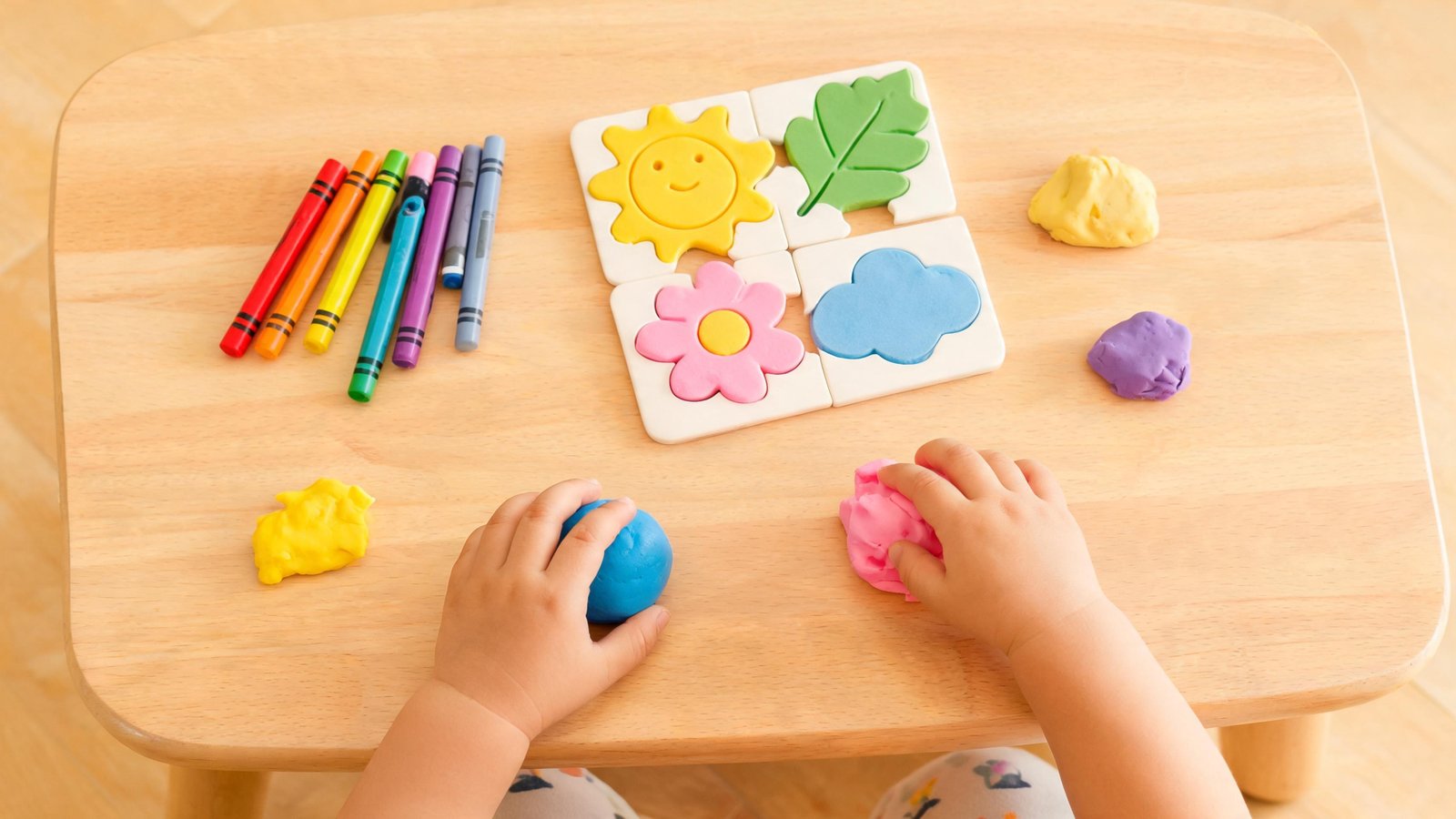
Playdough belongs here too. The CDC three-year tips say to let a child squish, press, pinch, and roll playdough into balls of different colors, because those motions build the hand for later buttoning and cutting. You do the cutting. They do the squishing.
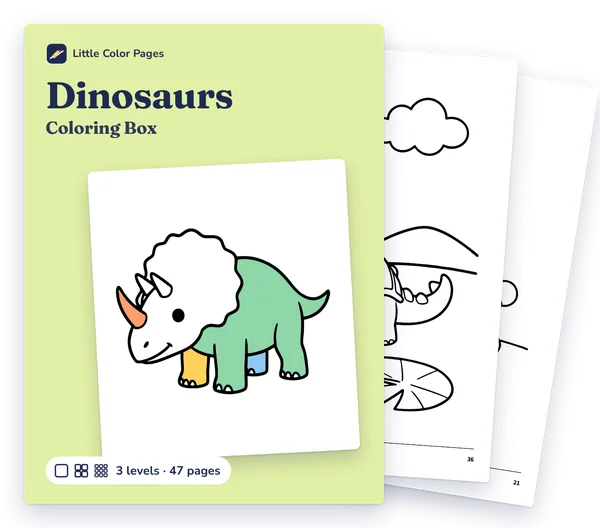
An activity box of paper, crayons, and coloring books is another CDC tip: color and draw lines and shapes together. Big dinosaur outlines match a child who likes that subject. The Dinosaurs Coloring Box offers coloring pages and simple activities for a child aged about 2 to 6 who loves dinosaurs, at three detail levels, with 47 pages in separate US Letter and A4 PDFs, for $3.00. On the Dinosaurs Coloring Box, age levels are a guide, not a learning claim.
More hand ideas from ZERO TO THREE's play list for this age:
- A photo cut into a few pieces, covered so the pieces last, becomes a homemade puzzle. Offer the uncut photo as a guide if the puzzle stalls.
- Playdough pizza on a paper plate, carried to you as if you were in a restaurant, uses the same hand muscles and starts a pretend story.
- Water painting on a sidewalk with a brush and a bowl of water. That page says to supervise closely during any water activity and to pour the water out when play ends.
Words and stories
Read, then ask what is happening in the picture and what might happen next. The CDC three-year page uses those two questions, and it says to ask for more detail when an answer comes.
Speak in a slightly longer sentence than the one you just heard, using real words. If you hear "need nana," the CDC example is to answer with "I want a banana."
Songs such as "Itsy Bitsy Spider" and "Twinkle, Twinkle, Little Star" are on that page as language play. Instructions with 2 or 3 steps are on that CDC page too, for example going to get shoes and a coat.
A stuffed-animal party builds the same language in a different way. ZERO TO THREE suggests paper plates, cups, and a playdough cake, then asking what the animals are doing at the party.
Counting in the room
Counting games are a CDC tip for this age: count body parts, stairs, and other things you use every day, because children are starting to learn about numbers. Keep the sets small. Three spoons on the table is a better ask than a pile of thirty.
Hide socks or blocks and ask for a small group of the same kind. The hunt is the game. More counting setups are on counting activities for preschoolers.
Moving through the day
Children ages 3 to 5 need to be active throughout the day, and caregivers should encourage active play such as jumping or riding a tricycle, according to CDC physical activity guidance. There is no minute quota on that page for this age band. A longer daily minute target on that page is for school-age children, so it is the wrong figure to chase here.
Floor and yard ideas that match the guidance:
- Paper lily pads and frog hops, with a "ribbit" if they want one. ZERO TO THREE uses that game for coordination and imagination.
- A marching parade with a pot and a spoon, led by the child, is that page's indoor stand-in for a day that stays inside.
- Shadow dancing outside, then chalk around the shadow, gets the body moving and ends in a picture.
- Two-step directions that include a run or a jump, such as "get the ball and throw it," are the listening game on that page. As the third birthday nears, the page tries a third step.
Playing with other children
Noticing other children and joining their play is a social milestone on the CDC three-year list. The tips on that page say to encourage play with other children so friendship and getting along have a place to practice.
Calming after a goodbye is on the same list: most children calm down within 10 minutes after you leave, such as at a childcare drop-off. A hard drop-off that lasts much longer is a reason to mention it to the doctor, not a reason to add another craft.
Feelings have words now. The CDC page says to name emotions and to offer a deep breath, a hug of a favorite toy, or a quiet corner when feelings run hot. A few clear rules, such as gentle hands, work better than a long list. Show the wanted action, then notice it when it happens.
A simple home rhythm
A useful day at home can be movement first, then a table stretch with crayons or playdough, then a story with questions, then outdoor or hallway play. Meal help fits in the middle: washing fruit or stirring, which the CDC page lists as simple kitchen tasks.
If the child is still closer to two, activities for two-year-olds sorts ideas by how much setup they take. If pretend play and pencil games are the new interest, activities for four-year-olds picks up there.
One limit: these ideas are not a preschool curriculum, and the CDC lists are not a screening test. Ask the child's doctor if a skill has dropped away.
What activities can you do with a 3 year old?
String large beads, draw a circle after you show how, count the stairs, and ask what is happening in a picture book.
What are some creative activities for 3-year-olds?
Squish playdough into balls, paint a sidewalk with water, or turn a cardboard box into a boat with a paper-plate wheel.
What do 3 year olds do for fun?
They join other children, pretend with stuffed animals, march to music, and help wash fruit or stir a bowl.
Sources
- Milestones by 3 Years, Centers for Disease Control and Prevention (2025)
- Child Activity: An Overview, Centers for Disease Control and Prevention (2025)
- Play Activities for 24 to 36 Months, ZERO TO THREE (2010)