Cute Halloween activities for preschoolers
Published 2026-10-16 · Updated 2026-10-16
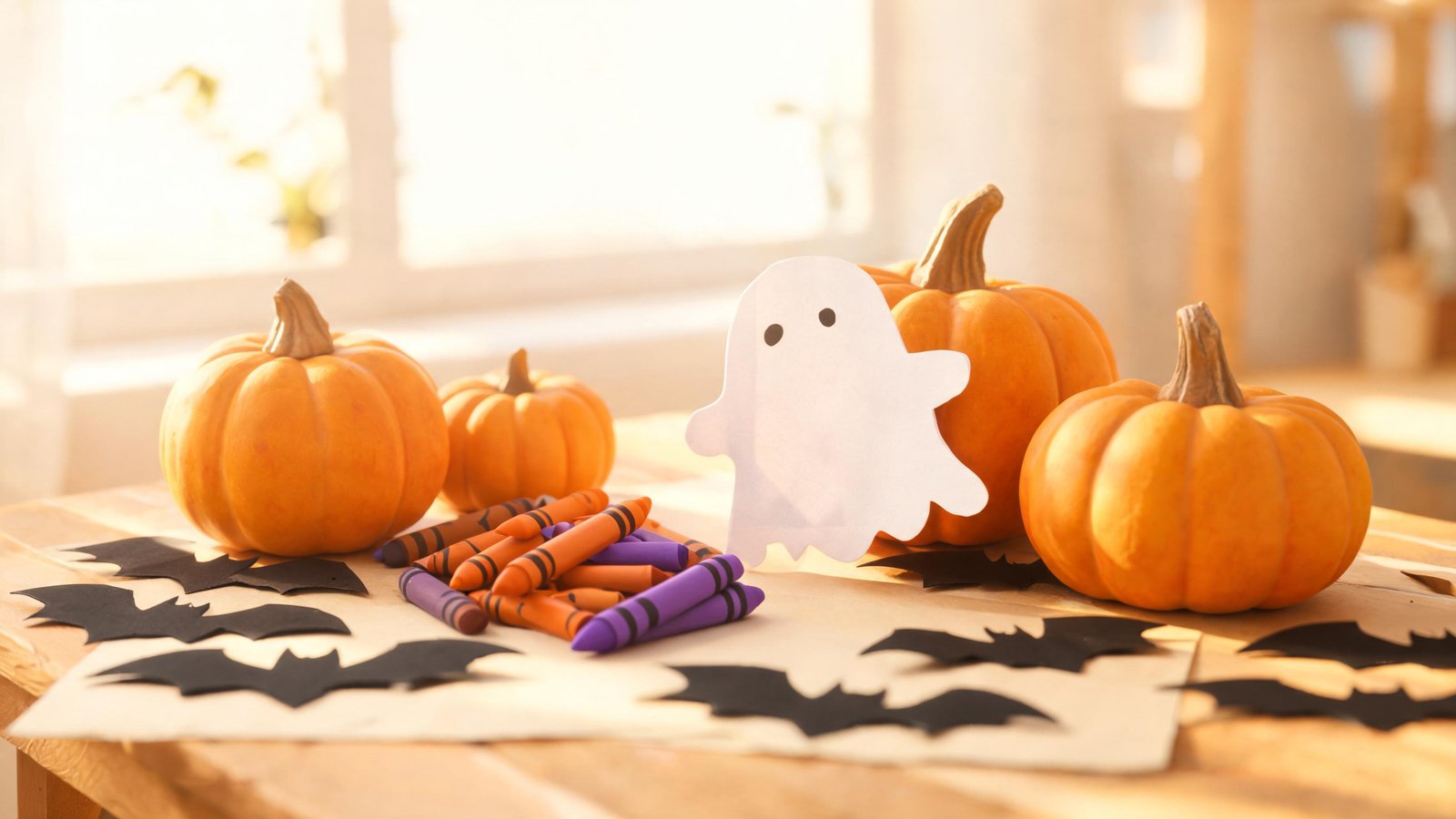
Cute Halloween for preschoolers is a short list for home or class. Run a pumpkin movement game, decorate a pumpkin instead of carving it, paint a paper plate, lace or sticker a pumpkin shape, practice a costume in daylight, take a daytime outing, hand out non-candy treats, count paper pumpkins, and keep a friendly coloring page within reach. Drop any prop or story that startles the child in front of you.
A full afternoon list
- Pumpkin parade. Call pick, carry, and roll. Children squat, walk in place, and rock side to side. A real pumpkin is optional.
- Friendly creature moves. Use a low crawl, a soft arm flap, and a float with waving arms. Name them spider, bat, and ghost, and keep the tone silly.
- Decorate, do not carve. The American Academy of Pediatrics says small children should decorate pumpkins, not carve them, drawing a face with markers while an adult does any cutting.
- Pumpkin insides, only for children who like mess. The academy's toddler Halloween page calls squishing the insides of a carved pumpkin a sensory activity. Use a tray and a spoon, and stop if the child pulls away.
- Paper-plate pumpkin. Mix red and yellow paint on a plate and add a paper stem.
- Lacing or stickers. Punch big holes in an orange card, or press stickers onto a pumpkin shape. The AAP lists puzzles of four or five large pieces among quiet hand activities for a three-year-old, so keep pieces large.
- Costume practice at home. Toddlers need to know that Halloween is just for fun and the scary stuff is all pretend, and the same talk helps a young preschooler. If the child refuses the outfit, let that stand. That page also notes that 12 months can make a big difference when a child sits the holiday out.
- A daytime outing. Try trick-or-treating while it is still light so bedtime holds, or look for a library or park event when the neighborhood starts after dark.
- Treats that are not candy. The toddler page lists crayons, stickers, chalk, and bubbles among options that are not sweets. Sort anything collected at a table, not on the sidewalk.
- Count and sort paper pumpkins into a bowl, matching them to dots. More counting ideas are in counting activities for preschoolers.
- Quiet coloring of a smiling pumpkin, a little bat, or a friendly ghost, set beside the loud game so a child can switch.
- A short book about pretend dress-up, then one question: what was pretend, and what was a real pumpkin?
Costumes, streets, and treats
Child pedestrian injuries are more likely on Halloween than on any other night of the year, the American Academy of Pediatrics says. Walk with young children, stay on the sidewalk, and cross as a group.
Costumes should be short enough to prevent tripping. Look for flame resistant on the label. Avoid sharp or long swords, canes or sticks. The academy treats non-toxic makeup and decorative hats as safer alternatives to masks, and a hat should not slide over the eyes. Test makeup on a small patch of skin first.
Babies and toddlers should not have hard candies, gummy candy, popcorn, gum, or whole nuts, and wrappers plus small toys can be a choking hazard, the same page says. Preschoolers should still eat at a table after an adult has looked at each piece.
Movement and quiet hand work
Children 3 to 5 need to be active throughout the day, the CDC says. Caregivers can encourage that in play, for example by jumping or riding a tricycle. The parade and the creature moves are enough movement for one sitting.
Play helps children grow strong and healthy, and it is also where new words show up. Name the stem, the bag, and the bat while you play.
Cutting with safety scissors and pasting is on the AAP list of activities many four-year-olds enjoy. Stay at the table for that one. Finger work past lacing is collected in fine motor activities for preschoolers.
A coloring set for the table
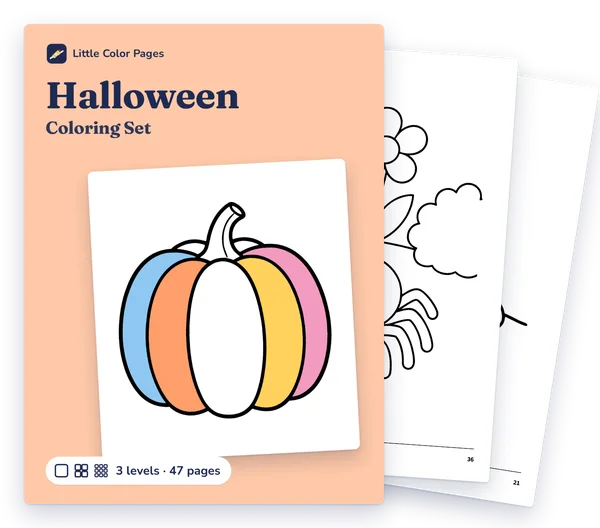
The Halloween Coloring Set is coloring pages and simple activities for a child aged about 2 to 6 who loves halloween, for the season, at three detail levels. It comes as separate PDFs for US Letter and A4. It is an instant download after checkout: one ZIP with a how-to-print guide. Its pictures are Pumpkin, Friendly Ghost, Little Bat, Witch Hat Kitten, Friendly Spider, Pumpkin Bucket, Friendly Owl, Pumpkin Costume, Toy Cauldron, Scarecrow, Caped Mouse and Halloween Cottage. They are made with AI image tools, then cleaned up and checked page by page. The Halloween Coloring Set is $3.00.
Paper, paint, and a store pumpkin are enough for the list above. One limit of this advice: it is a play menu, not a lesson sequence, and it will not suit a family that wants horror.
If the afternoon needs a wider plan
A class planning by age can open activities for three-year-olds or activities for four-year-olds. A gathering built around coloring sits with coloring party.
What are some fun Halloween activities for early-year children?
Marker-decorated pumpkins, a silly parade, sticker shapes, and a friendly coloring page. A child who refuses a costume can still join the pumpkin work.
What are some fun Halloween games for 4-year-olds?
A pumpkin parade, count-and-sort with paper pumpkins, and pasting at the table. Keep voices silly and skip props that startle.
Sources
- Halloween Fun & Safety Tips for Kids of All Ages, American Academy of Pediatrics (2026)
- Easing Babies & Toddlers into Halloween Fun: 8 Tips for Parents, American Academy of Pediatrics (2026)
- Child Activity: An Overview, Centers for Disease Control and Prevention (2025)
- 10 Things Every Parent Should Know About Play, NAEYC (2007)
- Hand and Finger Skills of Your Preschooler, American Academy of Pediatrics (2019)